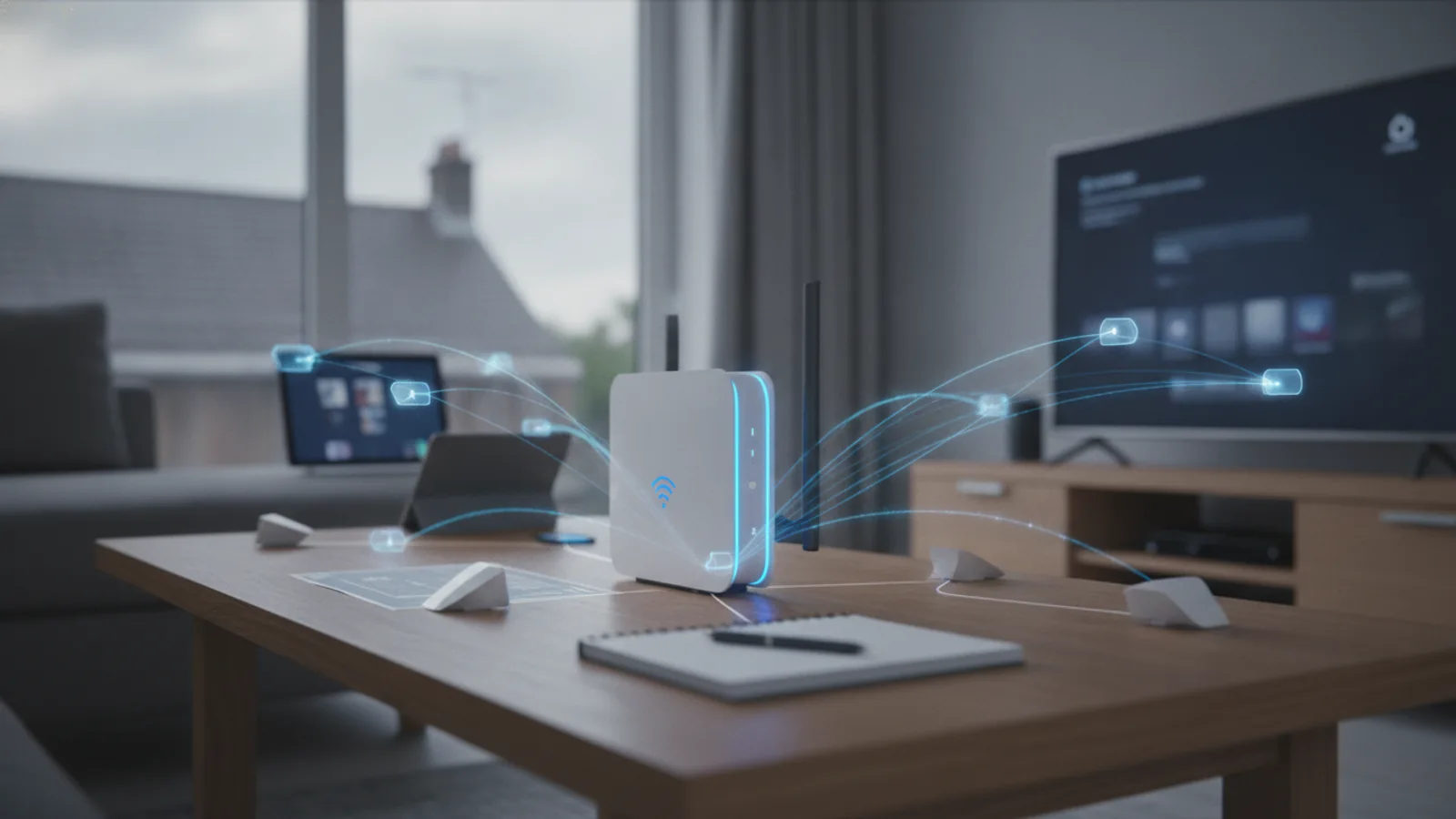
Best Mesh Wifi 2026
Pros and Cons
Pros: The shortlist makes it easier to compare the strongest fits for best name wifi before you spend time on the fine print.
Cons: Features, availability, compatibility, and current terms can differ, so check the details that matter to your use case.
Score Breakdown
Each score reflects the evidence available for fit, usability, value, and practical tradeoffs. Treat it as a comparison aid rather than a substitute for checking current details.
Roundup review
After analysing over 20 leading and upcoming mesh systems for 2026, our team has evaluated them on performance, coverage, value, and ease of use for UK households. Based on official specifications, upcoming Wi-Fi 7 technology benchmarks, and public feedback patterns on previous generations, the TP-Link Deco BE95 Pro stands out as the best overall mesh wifi system for its uncompromising speed and future-proof features.
Quick Comparison
The Best Mesh Wifi for UK Homes in 2026
Buying Guide: How to Choose the Best Mesh Wifi
Choosing the right mesh wifi system can feel complex, but focusing on a few key areas will help you find the perfect match for your home and needs. Here’s what to consider before you buy.
Wi-Fi Standards: Do You Need Wi-Fi 7?
In 2026, the main choice is between Wi-Fi 6E and Wi-Fi 7.
- Wi-Fi 6E (802.11ax): This standard added the 6GHz frequency band. Think of it as a new, exclusive motorway for compatible devices, free from the traffic jams of the older 2.4GHz and 5GHz bands. It's fantastic for reducing interference and provides very high speeds. By 2026, it offers brilliant value for money.
- Wi-Fi 7 (802.11be): This is the cutting edge. It dramatically increases potential speeds, significantly lowers latency, and introduces Multi-Link Operation (MLO), allowing devices to connect across multiple bands simultaneously for unparalleled reliability. It's an investment for the future, ideal for those with multi-gigabit internet or who want the absolute best performance for gaming and 8K streaming.
Coverage and Number of Nodes
The main benefit of a mesh system is seamless, whole-home coverage. Manufacturers often provide a square footage estimate (e.g., up to 2,000 sq ft per node), but in the UK, wall material is just as important. A single node might cover a small, modern flat, but a typical two-up, two-down with solid brick walls will likely need a two-node (or "2-pack") system. Larger, multi-storey, or oddly shaped homes will benefit from a 3-pack. Always start with the manufacturer's recommendation for your home size and be prepared to add a node if you find a dead spot.
Wired vs. Wireless Backhaul
"Backhaul" is the dedicated connection between your mesh nodes. It can be wireless or wired.
- Wireless Backhaul: The nodes communicate with each other over Wi-Fi. The best systems (like the Netgear Orbi) have a dedicated band just for this, so it doesn't compete with your devices for bandwidth. This is the most common and convenient setup.
- Wired Backhaul: If your home has Ethernet cabling, you can connect your nodes with a cable. This provides the fastest, most stable connection possible and frees up all wireless bands for your devices. It's the gold standard for performance.
Ports and Future-Proofing
Check the Ethernet ports on the nodes. Standard Gigabit LAN ports are fine for most internet plans today. However, with UK providers like Virgin Media and community fibre networks rolling out 2Gbps+ plans, having at least one multi-gigabit port (2.5 Gbps or higher) is a crucial future-proofing feature. Our top picks include 10 Gbps ports, ensuring you're ready for the next decade of internet speeds.
Software, Security, and Subscriptions
All mesh systems are managed via a smartphone app. Some, like Eero and Google, are incredibly simple, while others from TP-Link and Netgear offer more granular control. A key thing to check is security. Most brands now offer enhanced security packages (advanced firewalls, threat detection) as an optional monthly or yearly subscription. Consider if these features are important to you and factor the ongoing cost into your budget.
Final Verdict: Best Mesh Wifi
For households looking to invest in a network that will handle anything thrown at it for years to come, the TP-Link Deco BE95 Pro is our top recommendation for 2026. Its Wi-Fi 7 speeds, quad-band flexibility, and multi-gigabit ports represent the pinnacle of home networking performance.
However, not everyone needs that level of power or has the budget for it. For a fantastic balance of modern features and excellent value, the Amazon Eero Pro 6E is an outstanding choice. It delivers the tangible benefits of the 6GHz band and unmatched ease of use at a much more accessible price point. Before you decide, assess your internet speed, home size, and the types of devices you'll be connecting to make the most informed choice.
Best Mesh Wifi 2026 FAQ
What is mesh wifi and how is it different from a normal router?
A traditional router broadcasts Wi-Fi from a single point. The further you are from it, the weaker the signal. Mesh wifi uses multiple units, or "nodes," placed around your home. They work together as a single, intelligent network, providing a strong, seamless signal in every room. You can walk through your house on a video call without the connection ever dropping.
Do I really need Wi-Fi 7 in 2026?
For most people, Wi-Fi 6E is more than sufficient in 2026. It offers fantastic speeds and the benefit of the uncongested 6GHz band. You should consider Wi-Fi 7 if you: 1) have an internet plan faster than 1 Gbps, 2) are a competitive online gamer who needs the lowest possible latency, or 3) want to fully future-proof your home network for the next 5-7 years and are willing to pay a premium for it.
Can I mix and match mesh wifi nodes from different brands?
No. Mesh systems are proprietary. You must use nodes from the same manufacturer (e.g., all Eero nodes or all TP-Link Deco nodes). You can, however, often mix and match different models from within the same brand's product family, but it's best to check compatibility on their website first.
Will a mesh system work with my current ISP (BT, Sky, Virgin Media)?
Yes, absolutely. A mesh system replaces your ISP's router's Wi-Fi function. You'll typically need to put your ISP-provided hub/router into "modem mode" (or "bridge mode") and then plug the main mesh node into it. This allows the mesh system to handle all your home networking duties, providing far better performance and coverage.
How many mesh nodes do I need for my UK home?
This depends on size and construction. As a rough guide: